
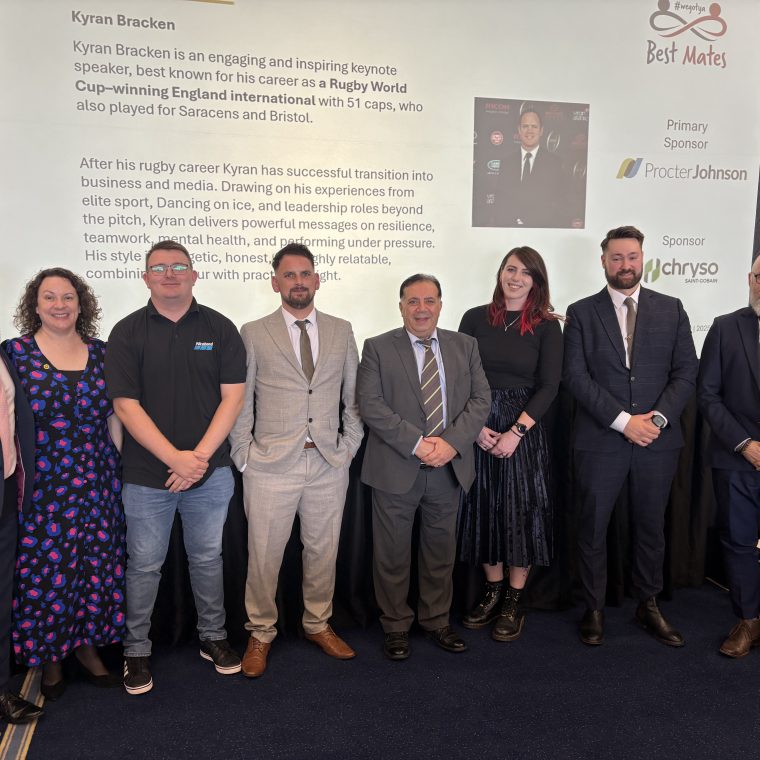

The Midlands Lunch 2026, held at Edgbaston Cricket Stadium in September, marked a significant milestone with the presentation of the region’s inaugural Student Prize.
The award showcased the exceptional talent and innovation emerging from the next generation of concrete professionals. A group of students from the University of Derby submitted entries, with three outstanding candidates shortlisted to present their dissertation projects at the lunch.
Each student was given five minutes to outline the aims, methodology and key findings of their research before a packed audience. The presentations were evaluated by Danielle Dawson (Holcim/Midlands Committee) and Claire Ackerman, Chief Executive of the Concrete Society, who assessed the entries on their technical merit, originality and relevance to the industry.
The three shortlisted projects were:
Optimisation of Aggregate Packing for Sustainable Concrete – Theo Starie, Heidelberg Materials
The dissertation investigated how aggregate particle-packing optimisation could be used to improve the sustainability of concrete produced with UK-sourced materials, the research applied the Modified Andreasen and Andersen (MAA) and Compressible Packing Model (CPM) to develop and assess optimised aggregate gradings using crushed limestone, land-based, marine and recycled aggregates.
By improving the balance between coarse and fine particles, the aim was to reduce the void space within the aggregate skeleton and therefore reduce the amount of cement paste required, the optimised gradings achieved approximately 4–6% higher packing density and enabled reductions in paste and binder content of around 10–15% while maintaining the required workability and compressive-strength performance, when packing optimisation was combined with 50% GGBS substitution, embodied-carbon reductions of up to approximately 44% were achieved.
The study demonstrated that aggregate optimisation could provide a practical additional route to lower-carbon concrete alongside conventional cement-replacement strategies.
Joshua Halliday, N&C Building Products Ltd
The dissertation investigated potential alternatives to Ground Granulated Blast Furnace Slag (GGBS), an established supplementary cementitious material used to reduce the clinker content and environmental impact of cement-based products. With the availability of GGBS becoming increasingly uncertain, the study assessed recycled glass powder and recycled aluminium oxide (Al₂O₃) as partial replacements for Ordinary Portland Cement (OPC). Replacement levels of 10%, 20% and 30% were tested, alongside ternary blends combining glass and aluminium oxide, with performance benchmarked against equivalent OPC–GGBS blends. Setting behaviour, flexural strength and compressive strength were assessed at 7, 28 and 56 days. The results showed that recycled glass provided a useful longer-term pozzolanic contribution, while aluminium oxide significantly delayed hydration when used as a standalone replacement. Combining the two materials improved performance compared with the individual alternatives, although none of the blends fully replicated the performance of GGBS. The project highlighted both the potential and limitations of using recycled materials as alternative SCMs and identified areas for further development.
Tom Shenton, Heidelberg Materials
This dissertation project focussed on the relationship between processed sand gradings, and the effect this has on the cement demand when used in concrete. The study looked at how/why a difference in sand grading can affect cement demand, then looked specifically at Heidelberg’s marine operations and how differences in cargo area, production equipment and blending of feed material could allow us to make a coarser material to improve concrete performance, without the need to spend millions on CAPEX.
All three presented well on the day, but there could only be one winner …. Theo Starie from Heidelberg Materials. Theo received the £100 Amazon gift card for his project and presentation.
This marks an important step for the Midlands with it joining a host of other Concrete Society regions in building connections with local universities and hosting a student prize competition.
Thank you to all the students that entered and to the Midlands committee, particularly Danielle, for her hard work in bringing this initiative to life.

