Skip links

Archive

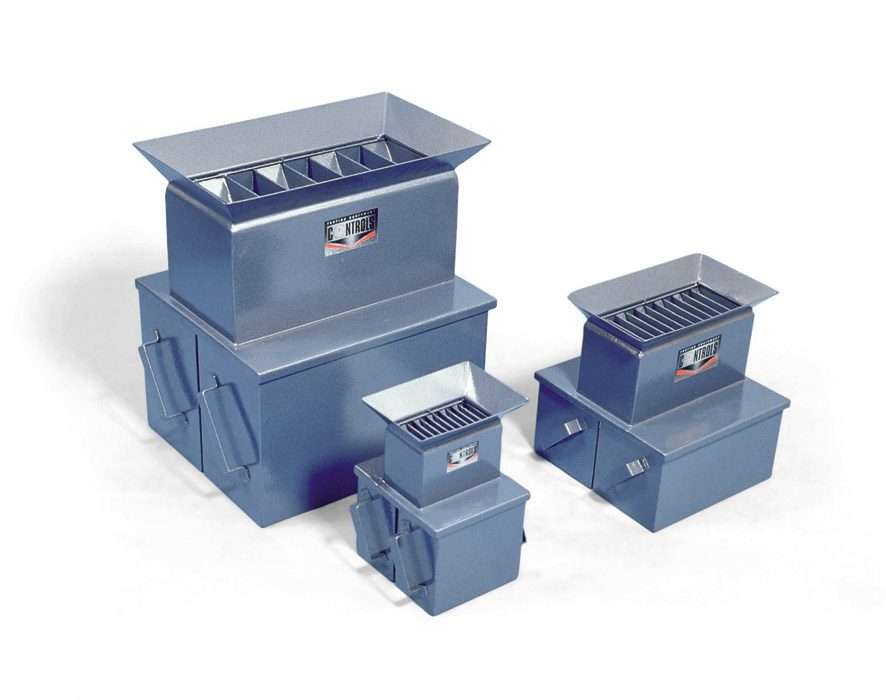
Riffle box

A sample divider (riffle box) is the most convenient method to reduce a bulk sample of aggregate to a smaller quantity for testing. The riffle box is designed so that material poured in the top is divided approximately equally and diverted to two sides

jonnyhough

jonnyhough

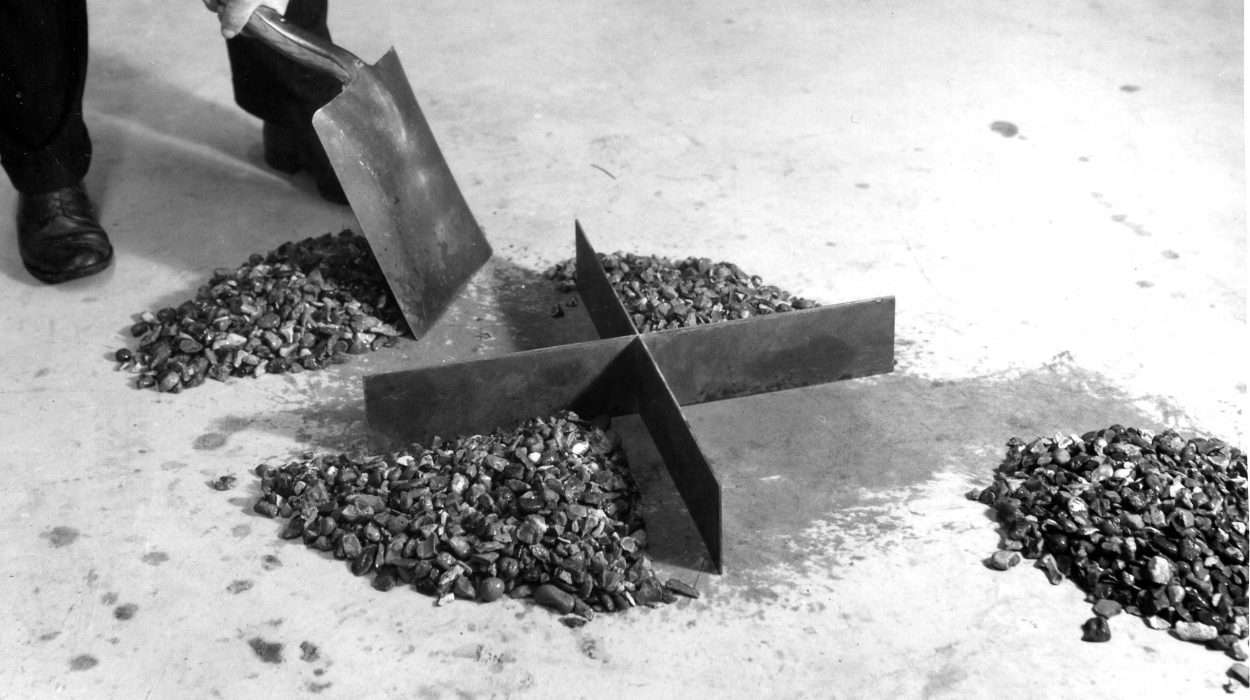
Quartering of aggregate

Quartering is the alternative method of reducing the size of a bulk aggregate sample where a sample divider (riffle box) is not available. The bulk sample should be shovelled to form a cone, and turned over to form a new cone, this being done three times. The third cone shoul d be flattened to an even layer 75 – 100 mm thick and then divided into four equal quadrants with two diagonally opposite quarters being discarded. The procedure is then repeated on the remainder until the desired size of sample remains. A similar process can be used for sub-dividing fresh concrete.

jonnyhough

jonnyhough

Aggregate transparency

Aggregate transparency can occur in formed concrete when there is segregation of fines and associated water between the form-face and the coarse aggregate.

jonnyhough

jonnyhough

Negative aggregate transparency

Negative aggregate transparency can occur in formed concrete when there is segregation of fines and associated water between the form-face and the coarse aggregate.

jonnyhough

jonnyhough

Water absorption limits on aggregates

Limits on aggregate water absorption are rare though they may be useful to link to an undesirable concrete property, such as freeze-thaw susceptibility, as water absorption is easily determined. Historically it is not known the source of the limits but the following may be of interest.

jonnyhough

jonnyhough

Lightweight aggregates

In the UK the most commonly used lightweight aggregate is LYTAG, a sintered fly ash, also known as pulverised fuel ash (pfa). Other aggregates, made from a variety of raw materials, are shown in the Table below.

jonnyhough

jonnyhough

Heavyweight concrete

Heavyweight concrete uses heavy natural aggregates such as barites or magnetite or manufactured aggregates such as iron or lead shot. The main land-based application is for radiation shielding (medical or nuclear). Offshore, heavyweight concrete is used for ballasting for pipelines and similar structures. EN 206:2013 defines heavyweight concrete as having an oven dry density greater than 2600kg/m3.

jonnyhough

jonnyhough

Recycled glass aggregate

The concrete industry places a heavy demand on primary aggregate sources

jonnyhough

jonnyhough

Aggregate sizes

Fine aggregate is material that will pass through a 4mm sieve. Generally fine aggregate is a naturally occurring sand material, crushed rock material, or a combination of both. The distribution of particle sizes, known as grading, is important because it effects some properties of the plastic concrete, e.g. water demand and bleeding. A uniform distribution of particle sizes is preferable.

jonnyhough

jonnyhough

This website uses cookies to improve your web experience.